Korean Bibimbap
Highlighted under: Inspired Favorites
Korean Bibimbap is a vibrant and flavorful rice dish topped with an assortment of vegetables, meat, and a fried egg, all brought together with a spicy gochujang sauce.
This traditional Korean dish is not only delicious but also visually stunning, making it perfect for gatherings.
Why You'll Love This Recipe
- A perfect balance of flavors and textures in every bite.
- Customization options to suit any taste preference.
- Healthy ingredients packed with nutrients.
The History of Bibimbap
Bibimbap, a traditional Korean dish, dates back to the 16th century and has evolved over the years into various regional versions. The name 'bibimbap' translates to 'mixed rice,' which perfectly encapsulates the essence of this dish. Originally, it was served as a part of a royal court meal, showcasing the harmony of flavors and ingredients typical in Korean cuisine.
The dish's vibrant colors not only make it visually appealing but also symbolize the importance of balance in Korean culture. Each ingredient represents different elements of nature, promoting a well-rounded and nutritious meal. Whether enjoyed at home or in a restaurant, bibimbap remains a beloved staple in Korean dining.
Nutritional Benefits
Korean Bibimbap is not just a feast for the eyes; it also packs a nutritional punch. With a base of rice and an assortment of vegetables, this dish is rich in carbohydrates, vitamins, and minerals. Spinach and bean sprouts are particularly notable for their high iron content, essential for energy production and overall health.
Adding a protein source, such as ground beef or tofu, enhances the dish's nutritional profile, providing the body with essential amino acids. The inclusion of healthy fats from sesame oil further complements the dish, promoting heart health. Overall, bibimbap is a balanced meal that can be enjoyed as part of a healthy diet.
Customization and Variations
One of the most delightful aspects of bibimbap is its versatility. You can customize it according to your taste preferences or dietary restrictions. For a vegetarian or vegan option, simply substitute the meat with tofu or additional vegetables. You can also experiment with different toppings like kimchi or avocado for a twist on the traditional recipe.
Moreover, if you prefer a milder flavor, adjust the amount of gochujang or try a different sauce. Bibimbap is a dish that encourages creativity in the kitchen, making it a fun and engaging meal for everyone to enjoy.
Ingredients
For the Bibimbap
- 2 cups cooked white rice
- 1 cup spinach, blanched
- 1 cup bean sprouts, blanched
- 1 cup carrots, julienned
- 1 cup zucchini, julienned
- 1 cup shiitake mushrooms, sliced
- 1 cup ground beef or tofu (for vegetarian option)
- 4 eggs
- Sesame oil
- Gochujang (Korean chili paste)
- Soy sauce
- Salt and pepper to taste
Feel free to add or substitute your favorite vegetables!
Instructions
Prepare the Vegetables
In a pan, sauté the carrots, zucchini, and mushrooms in a bit of sesame oil until tender. Season with salt and pepper.
Cook the Meat or Tofu
In the same pan, cook the ground beef or tofu until fully cooked. Add soy sauce to taste.
Fry the Eggs
In a separate pan, fry the eggs sunny-side up.
Assemble the Bibimbap
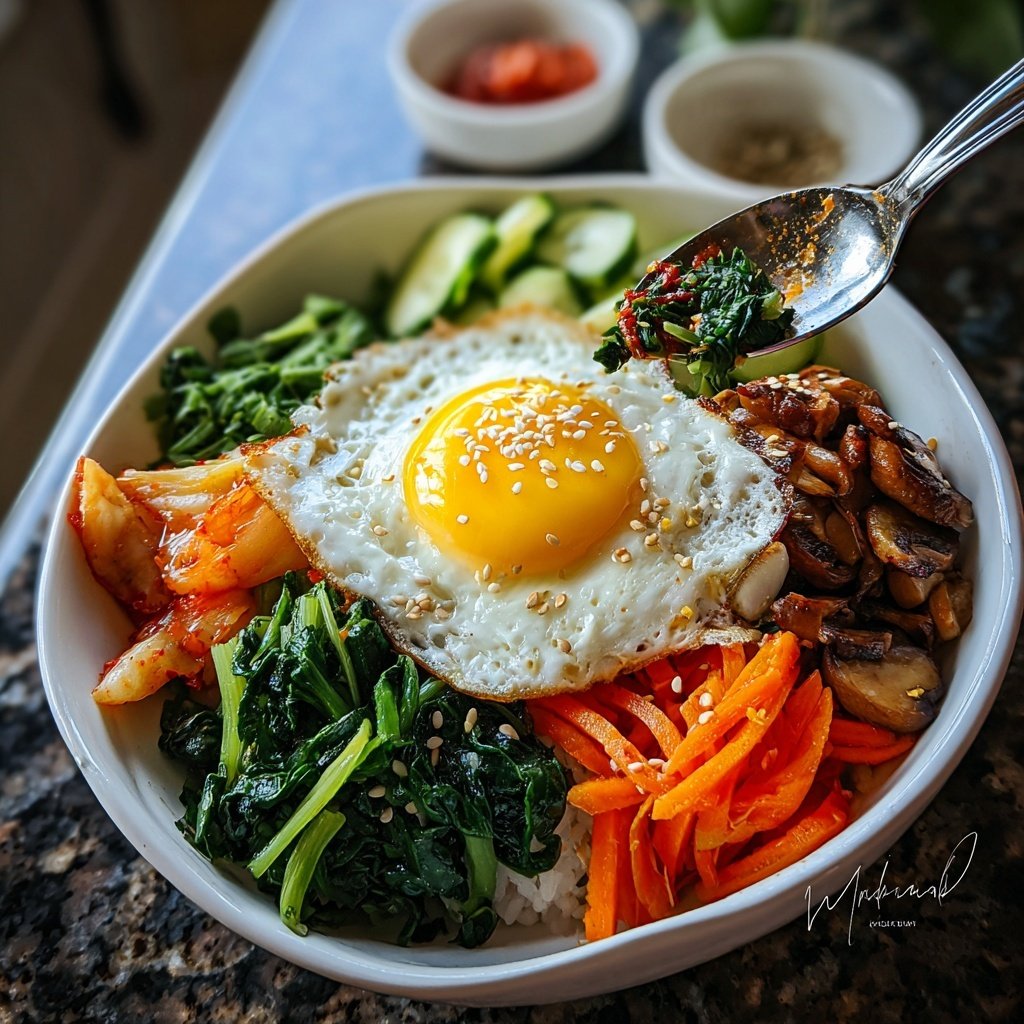
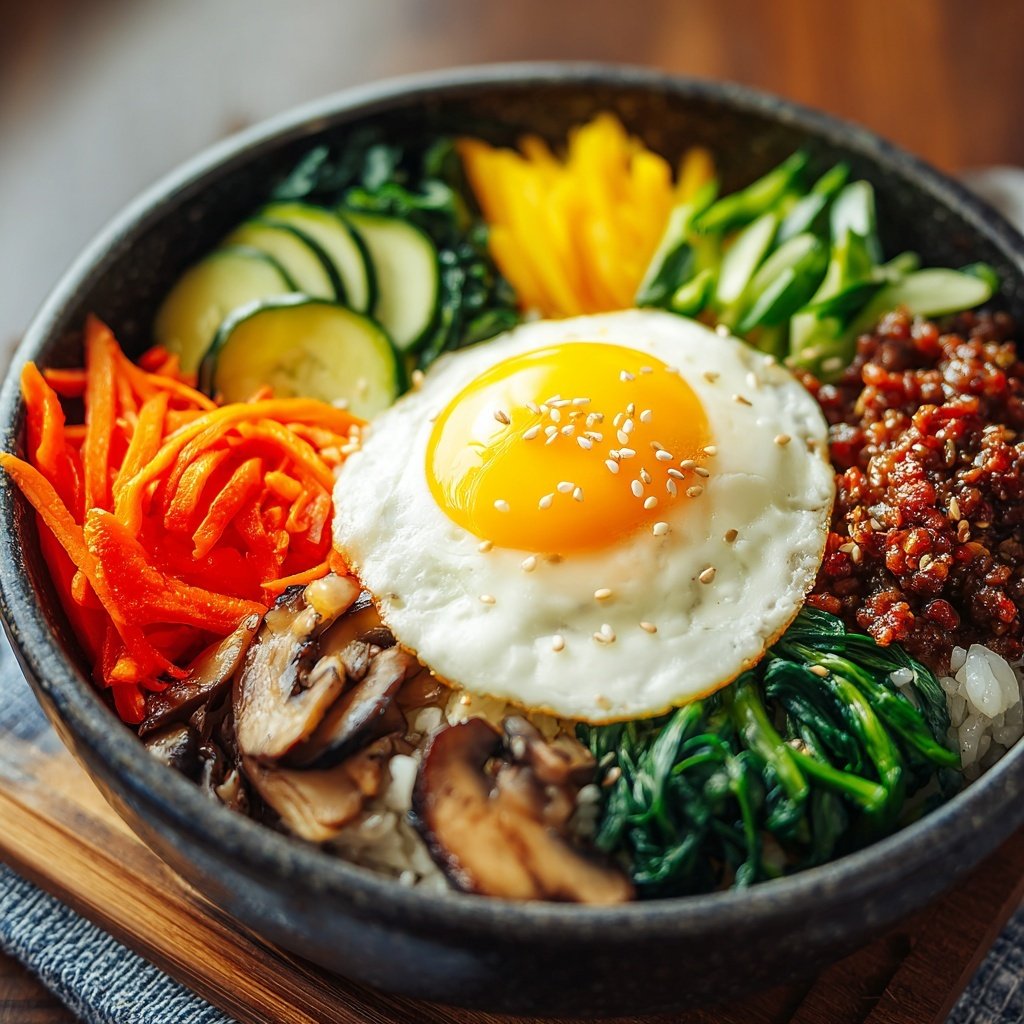
In a bowl, place a serving of rice at the bottom, then arrange the vegetables and meat/tofu on top. Add the fried egg in the center.
Serve
Drizzle with gochujang and sesame oil before mixing everything together to enjoy!
Mix well before eating to combine all the flavors.
Pro Tips
- For added flavor, top with sesame seeds and chopped green onions.
Tips for Perfect Bibimbap
To achieve the best texture in your bibimbap, use freshly cooked rice. Ideally, it should be slightly warm and fluffy. This base allows the other ingredients to meld beautifully, enhancing the overall flavor. If you have leftover rice, consider reheating it with a splash of water to restore its moisture.
When preparing your vegetables, try to keep them vibrant and crisp by not overcooking them. Sautéing them briefly will help preserve their nutrients and crunch, making each bite satisfying. Feel free to mix in your favorite seasonal vegetables for added freshness.
Serving Suggestions
Bibimbap is best served in individual bowls, allowing each person to mix their ingredients to their liking. Presenting it this way not only makes for a beautiful table setting but also engages everyone in the meal preparation process. Consider serving it with a side of kimchi, which adds a delicious tang and spice that complements the dish perfectly.
For those who enjoy a bit of heat, offer extra gochujang or a sprinkle of sesame seeds on the side. Pairing bibimbap with a light Korean soup, such as miso or kimchi jjigae, can round out the meal, providing a comforting and satisfying dining experience.
Questions About Recipes
→ Can I make bibimbap vegetarian?
Yes! Just replace the meat with tofu or more vegetables.
→ What type of rice is best for bibimbap?
Short grain white rice is traditional, but you can use brown rice for a healthier option.
→ Can I prepare bibimbap in advance?
While the components can be prepared ahead of time, it's best to assemble just before serving.
→ What can I substitute for gochujang?
If you don't have gochujang, you can use a mix of red pepper flakes and miso paste, but the flavor will differ.
Korean Bibimbap
Created by: Maeve Colchester
Recipe Type: Inspired Favorites
Skill Level: Intermediate
Final Quantity: 4 servings
What You'll Need
For the Bibimbap
- 2 cups cooked white rice
- 1 cup spinach, blanched
- 1 cup bean sprouts, blanched
- 1 cup carrots, julienned
- 1 cup zucchini, julienned
- 1 cup shiitake mushrooms, sliced
- 1 cup ground beef or tofu (for vegetarian option)
- 4 eggs
- Sesame oil
- Gochujang (Korean chili paste)
- Soy sauce
- Salt and pepper to taste
How-To Steps
In a pan, sauté the carrots, zucchini, and mushrooms in a bit of sesame oil until tender. Season with salt and pepper.
In the same pan, cook the ground beef or tofu until fully cooked. Add soy sauce to taste.
In a separate pan, fry the eggs sunny-side up.
In a bowl, place a serving of rice at the bottom, then arrange the vegetables and meat/tofu on top. Add the fried egg in the center.
Drizzle with gochujang and sesame oil before mixing everything together to enjoy!
Extra Tips
- For added flavor, top with sesame seeds and chopped green onions.
Nutritional Breakdown (Per Serving)
- Calories: 550 kcal
- Total Fat: 20g
- Saturated Fat: 4g
- Cholesterol: 210mg
- Sodium: 700mg
- Total Carbohydrates: 70g
- Dietary Fiber: 4g
- Sugars: 5g
- Protein: 20g